
Military Benefits App
Military Benefits AppLifestyle
4.662.00 Reviews
- Version
- 1.0.11
- Installs
- 10.00K
- Age Rating
- Everyone
Screenshots
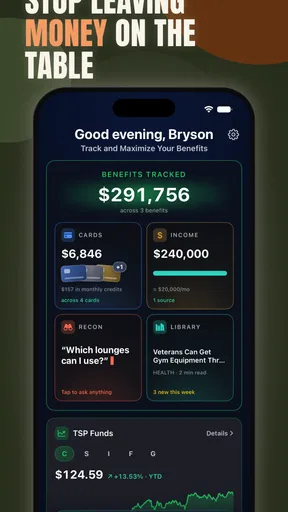
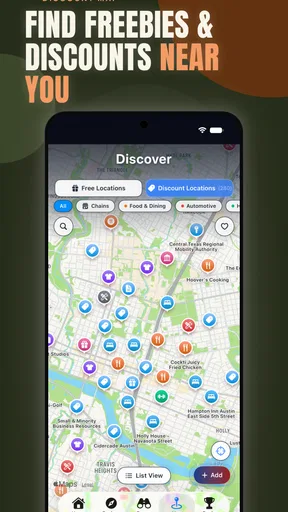
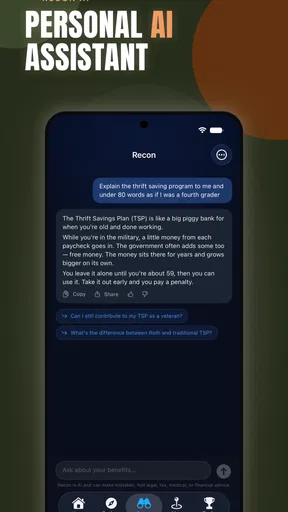
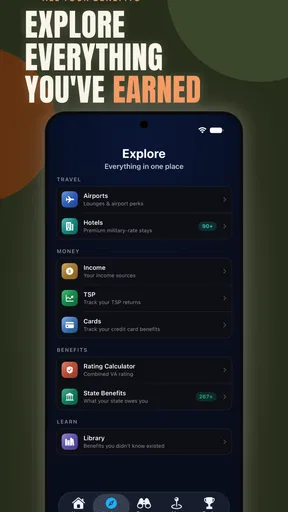
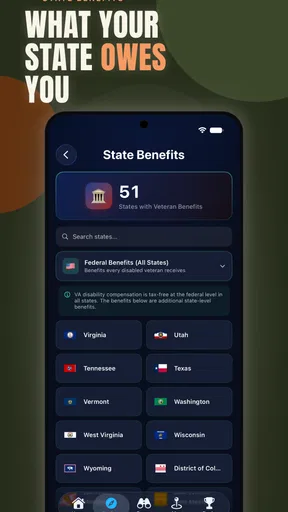
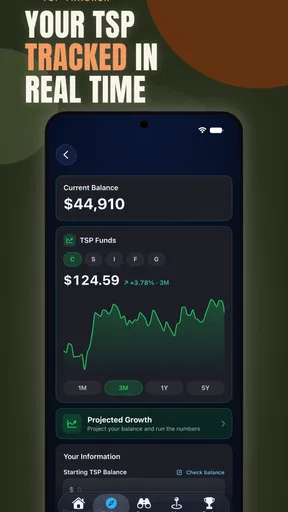
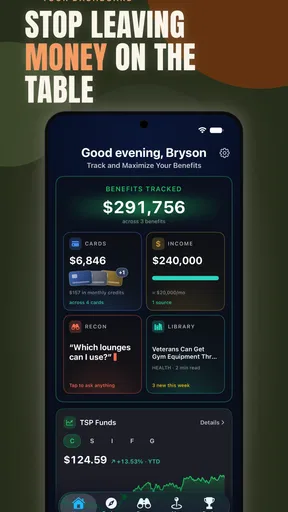
Our Review of Military Benefits App
 Analysis by Appyee
I came away from Military Benefits App thinking of it as a practical starting point rather than a complete replacement for every military-benefit resource. Its purpose is clear: help people find discounts and keep track of benefits in one lifestyle-focused app. That combination can be genuinely useful when information is scattered across websites, emails, membership cards, and local businesses. At the same time, the app works best when I treat it as an organized companion and still use judgment before relying on an offer or benefit for an important purchase.
The app is free to install, carries an Everyone age rating, and is published by Military Benefits App. It has built a respectable early audience, with over a thousand ratings and an average score of 4.6. Those figures suggest that the basic idea is connecting with users, although a rating alone cannot tell me whether every discount is current or equally useful in every location.
How the app fits into everyday military life
The most appealing part of this lifestyle app is the way it brings two related tasks together. Finding a military discount is usually a search problem, while tracking benefits is an organization problem. Many tools handle one of those jobs reasonably well, but fewer try to make both part of the same routine. I found that distinction more important than the short store summary might suggest.
Imagine planning a family trip while trying to keep spending under control. I might check for a military discount before booking, then look through my saved benefit information when arranging transport, accommodation, or another service. The value is not just discovering one offer. It is reducing the number of places I need to remember and making benefit checking part of the planning process instead of an afterthought at checkout.
That workflow also suits less obvious situations. A newly relocated service member may be learning which nearby businesses recognize military status. A spouse may want a quick way to investigate savings without knowing the names of local programs. A veteran may be sorting through benefits that are useful at different times rather than every day. In each case, the app can serve as a first pass that turns a vague question—“Is there anything available for me?”—into a more manageable search.
I would not describe it as a specialist case-management platform. Its strength is convenience and discovery. If I need formal eligibility guidance, official documentation, or a definitive answer about a government benefit, I would move to the relevant official source. The app is more helpful for organizing awareness and finding practical savings than for replacing authoritative channels.
What makes the discount side useful
Discount discovery becomes more valuable when I use it before making a decision, not after I have already paid. A simple habit is to check the app at the beginning of a shopping trip, travel search, or service appointment. That gives me time to compare the available option with the ordinary price and to confirm what the merchant actually accepts.
This matters because a military discount is not automatically the best deal. A public promotion, membership price, seasonal sale, or local offer may sometimes beat it. The smart approach is to use the app to identify a possibility, then compare the final terms. I see that as one of the app’s most important practical lessons: finding an offer and proving that it is the best offer are two different tasks.
Another useful habit is checking the details close to the moment of purchase. Discounts can depend on location, product category, timing, or the type of military identification presented. I would avoid saving an offer mentally and assuming it will work everywhere. Instead, I would use the app as a prompt to verify the current conditions with the business before committing money or making a special trip.
For families, this can prevent an awkward situation at the counter. If one person is making the purchase, that person should know whether the benefit applies to them, whether the discount covers the whole transaction, and whether identification will be requested. A few seconds of preparation can be more valuable than discovering a potential saving only when the receipt is being printed.
Why benefit tracking is more than a list
The tracking side has a different kind of value. Benefits are easy to forget when they are not used regularly, especially during moves, changes in family circumstances, or periods when work and service responsibilities become busy. Keeping them visible can help me notice what deserves attention instead of waiting until a deadline or major expense forces a rushed search.
I would use the tracking area as a personal review system. Rather than adding everything and never looking again, I would group benefits by when they might matter: recurring household needs, travel, education, health-related support, family services, or one-time opportunities. Even without treating the app as an official record, that structure can help me decide what to investigate next.
A particularly useful workflow is to connect a benefit with an action. For example, instead of merely noting that a benefit exists, I would record a reminder to check eligibility, gather the required information, or revisit it before a planned purchase. That turns passive storage into a small checklist. It is the sort of use that a short store description does not explain, but it is where a tracking tool can earn its place on a phone.
I would also review saved information after a move or a change in status. Local discounts may be less relevant in a new area, while different opportunities may become more practical. Treating the app as a living personal shortlist, rather than a permanent archive, should make it less cluttered and more useful over time.
The strongest evidence in daily use
The app’s strongest case is its focus. It is not trying to be a general shopping app, a social network, or a broad news reader. The entire concept is aimed at military-related savings and benefits, which makes the purpose easy to understand. When I open it, I already know what kind of problem I am trying to solve.
That focus is especially helpful for people who are tired of searching through generic discount websites. General deal platforms may contain more offers overall, but they often make military eligibility just one small filter among many. A purpose-built app can make that search feel more direct, particularly when I want to check a benefit quickly rather than browse entertainment or unrelated promotions.
The developer name, Military Benefits App, also makes the product’s intended audience immediately apparent. That clarity is useful for service members, veterans, and families who want a dedicated place to begin. It does not automatically guarantee that every entry will fit every user, but it does make the app easier to evaluate than a vague lifestyle product with military discounts buried inside it.
The current release is version 1.0.11, and the minimum requirement is Android 8.0. That gives the app a reasonably broad reach for people using older Android phones, although anyone with a device below that requirement would need another way to manage these searches. The app is free to download, but it also lists optional in-app purchases ranging from $12.99 to $59.99 per item. I would pay close attention to what any optional purchase provides before spending, especially because the basic download already establishes the main purpose of finding discounts and tracking benefits.
Its early reception is encouraging without being a reason to switch off my own judgment. The app has more than ten thousand installs and 62 written reviews, alongside its 4.6 average. That is enough to show real interest, but it is still a relatively modest footprint compared with long-established general discount services. I would consider that a sign to test the app against my own local needs rather than assuming it will have equally strong coverage everywhere.
The meaningful weakness: organization cannot guarantee usefulness
The central limitation is built into the concept. An app can make benefits easier to find and track, but it cannot control what a merchant offers, how eligibility is interpreted, or how quickly real-world conditions change. Even an attractive entry can become less useful if it applies only to a particular location, excludes certain products, or requires a form of identification I do not have with me.
That means I would not rely on the app as the final authority at checkout. I would verify the important details directly, especially for a large purchase, a trip, or anything involving a nonrefundable booking. This extra step slightly reduces the feeling of one-tap convenience, but it is the responsible trade-off. The app can narrow the search; the business or official provider should settle the final terms.
There is also a risk of benefit clutter. Tracking every possible item may feel productive at first, but a long list can become harder to use than no list at all. I would keep only benefits that are relevant to my household or likely to be used. A short, reviewed collection is more practical than a large pile of forgotten entries.
The optional purchase range is another point worth considering. Because the app is free to install while also offering paid items, I would begin with the no-cost experience and decide whether the added value is clear. Users who expect every part of a benefits directory to remain free may find that model frustrating. Users who are comfortable paying for a useful upgrade should still compare the purchase with the amount of time or money it is likely to save.
Finally, the app is not the right choice for someone who wants only official government guidance. If my question concerns eligibility, applications, legal status, or documentation, I would go straight to the responsible official organization. Using a lifestyle app for that kind of answer could create confusion. Its role is better understood as discovery, organization, and everyday planning.
Who should make it part of a routine
I think the best audience is service members, veterans, and military families who regularly look for practical savings and want a dedicated place to organize what they find. It is particularly suitable for people who are moving, traveling, managing a household budget, or trying to make better use of benefits they already know about but rarely remember to check.
It may also help someone who is new to military discounts. Rather than starting with a broad internet search, that user can begin with a focused app, build a shortlist, and learn which kinds of offers are actually relevant to daily life. The learning process is important: after a few searches, the user may become better at spotting when a discount is worthwhile and when a normal promotion is better.
Families can get more from it if they agree on a simple routine. One person can check opportunities before travel or major purchases, while another can review tracked benefits periodically. That avoids duplicate effort and makes the app a shared planning aid rather than a forgotten icon. I would still keep sensitive or official records in the appropriate secure place rather than treating a convenience app as a document vault.
The app is less suitable for someone who rarely uses discounts, prefers a single official source, or already has a well-maintained system that covers the same tasks. It is also not ideal for users who want highly detailed financial planning, formal benefits management, or guaranteed nationwide availability. In those cases, a government portal, employer resource, specialist adviser, or a simple personal notes system may be the better tool.
Small habits that improve the experience
My first recommendation is to check before planning, not during the final step. If I am comparing hotels, services, or purchases, I would search early enough to compare the military offer with other prices. This avoids treating the first discount I see as automatically superior.
My second recommendation is to keep tracked benefits selective. I would remove entries that no longer match my location or circumstances and revisit the list after a move, a change in family needs, or a major annual planning period. The app becomes more useful when it reflects my real life instead of trying to preserve everything forever.
My third recommendation is to build verification into the workflow. After finding an offer, I would check its conditions, confirm what identification is needed, and contact the merchant when the purchase is important. That may sound cautious, but it prevents the most common disappointment with discount tools: arriving with an expectation that the business does not share.
My fourth recommendation is to judge optional purchases by outcomes rather than by the promise of more content. I would ask whether a paid item saves meaningful time, uncovers a benefit I can actually use, or improves organization enough to justify its cost. If the answer is no, the free experience may be sufficient.
My final verdict
Military Benefits App has a clear and worthwhile idea: make military discounts easier to discover while giving users a place to keep benefits in view. I like it most as a practical planning companion, especially for households that often search for savings, relocate, travel, or struggle to remember which benefits deserve attention.
Its limitations are equally clear. It cannot replace official guidance, guarantee that every offer will suit every user, or remove the need to verify conditions before spending. The optional in-app purchases also mean I would explore the free experience carefully before deciding whether anything extra is worthwhile.
Overall, I would recommend giving it a try if military-related discounts and benefit organization are recurring parts of your life. The best results come from using it as a focused starting point, then confirming important details through the merchant or official provider. For that audience, it can turn a scattered search into a manageable habit. For everyone else, a general deal app or a simple notes system may be enough.
Verdict
Strengths of Military Benefits App
- Centralizes military benefits information in one convenient place.
- May help users discover discounts and services they might otherwise miss.
- Useful for comparing available benefits before making purchases or plans.
- Can save time by reducing the need to search multiple websites.
- Helpful for service members, veterans, and eligible family members.
Limitations of Military Benefits App
- Eligibility rules may vary and require additional verification.
- Benefit details can change without immediate notice.
- Some offers may be limited by location or participating providers.
- The app may not cover every branch, program, or regional benefit.
- Users may still need official documents or websites to complete applications.
Similar Picks in This Category
View All
SmartThings
Samsung Electronics Co., Ltd.4.6

Google Home
Google LLC4.0

Pinterest4.2

Astrotalk - Talk to Astrologer
Astrology & Horoscope4.7

My Verizon
Verizon Consumer Group4.5

Samsung Wallet (Samsung Pay)
Samsung Electronics Co., Ltd.4.1
Frequently Asked Questions
What is the Military Benefits App used for?
The Military Benefits App is designed to help service members, veterans, retirees, and eligible family members find and organize information about military-related benefits. Depending on the version and provider, it may include details about healthcare, education, housing, discounts, financial assistance, employment resources, and support services. It is best used as an information and reference tool rather than as a replacement for official government websites or personal assistance from a benefits representative.
Who can use the Military Benefits App?
The intended audience generally includes active-duty personnel, National Guard and Reserve members, veterans, military retirees, spouses, dependents, and sometimes surviving family members. Eligibility for individual programs is not determined simply by downloading the app. Each benefit can have different requirements based on service history, discharge status, location, rank, disability rating, or family relationship, so users should carefully review the conditions and confirm their eligibility with the relevant official agency.
Does the app apply for benefits on my behalf?
In most cases, the Military Benefits App provides guidance, summaries, calculators, links, or contact information rather than automatically submitting a complete application for you. Some versions may direct users to official online forms or portals, but you should verify where your information is being sent before entering sensitive details. Always keep copies of submitted documents, check application deadlines, and contact the responsible military or government office when an official decision is required.
Is the information in the Military Benefits App official and up to date?
The app can be useful for discovering available programs, but users should not assume that every description, amount, deadline, or eligibility rule is permanently current. Military benefits and policies may change, and information can differ by country, state, branch, or personal circumstances. Before making financial, healthcare, education, or legal decisions, compare the app’s information with the official website or office responsible for administering the benefit.
Is the Military Benefits App safe to download and use?
Download the app only from a trusted source, such as the official Google Play Store or Apple App Store, and check the developer name, privacy policy, recent reviews, and requested permissions. Be particularly careful if the app asks for military identification numbers, banking information, medical records, or passwords. Use strong account security, avoid sharing login details, and remember that official agencies will not normally require you to provide confidential information through suspicious links or unsolicited messages.
